Diversification of Amniote Pallial Development and Cell Types
The amniote pallium has followed distinct evolutionary paths at both developmental and molecular levels.
Developmental divergence
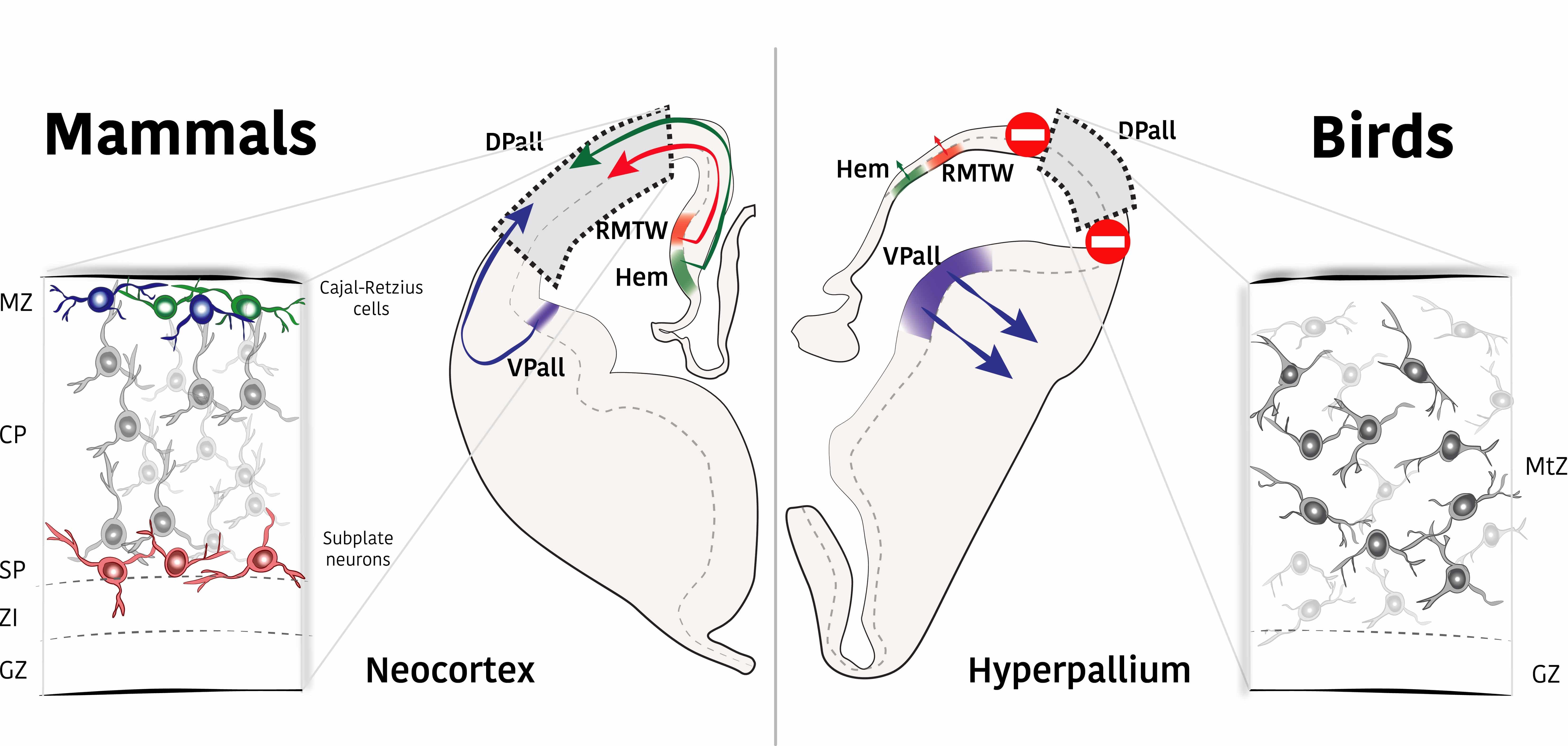
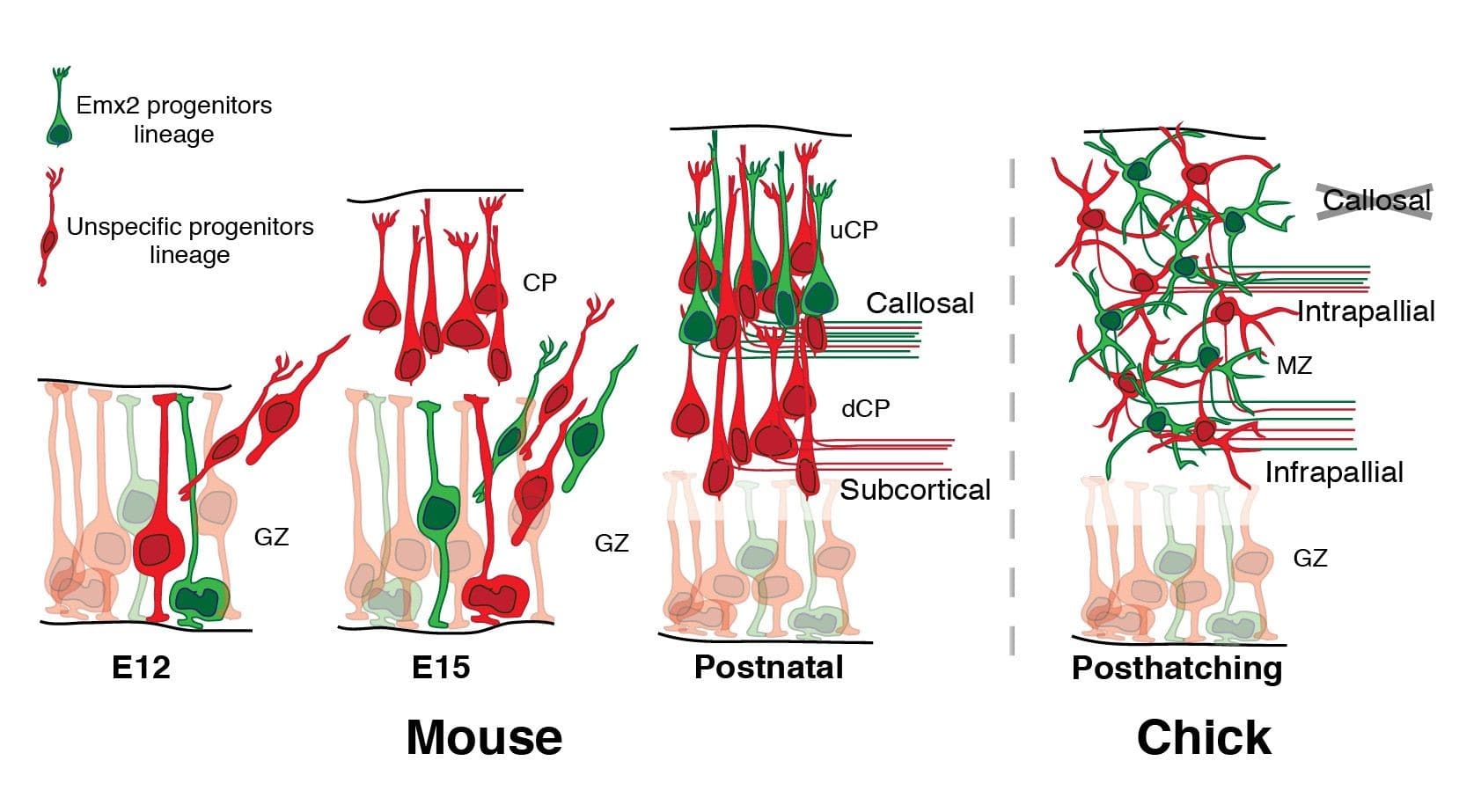
Birds, reptiles and mammals generate pallial circuits through fundamentally different neurogenic strategies. Despite this divergence, both lineages construct comparable circuit motifs, showing that similar functional architectures can emerge from different developmental logics.


Cell-type divergence
Glutamatergic projection neurons have diversified substantially between birds and mammals, each lineage adopting unique developmental programs. In contrast, GABAergic interneurons display deep conservation across amniotes, highlighting an evolutionary balance between divergence and stability.
Together, these findings reveal how the pallium achieves functional convergence through divergent developmental and cellular mechanisms, offering a new framework to interpret brain evolution.
Tangential migration
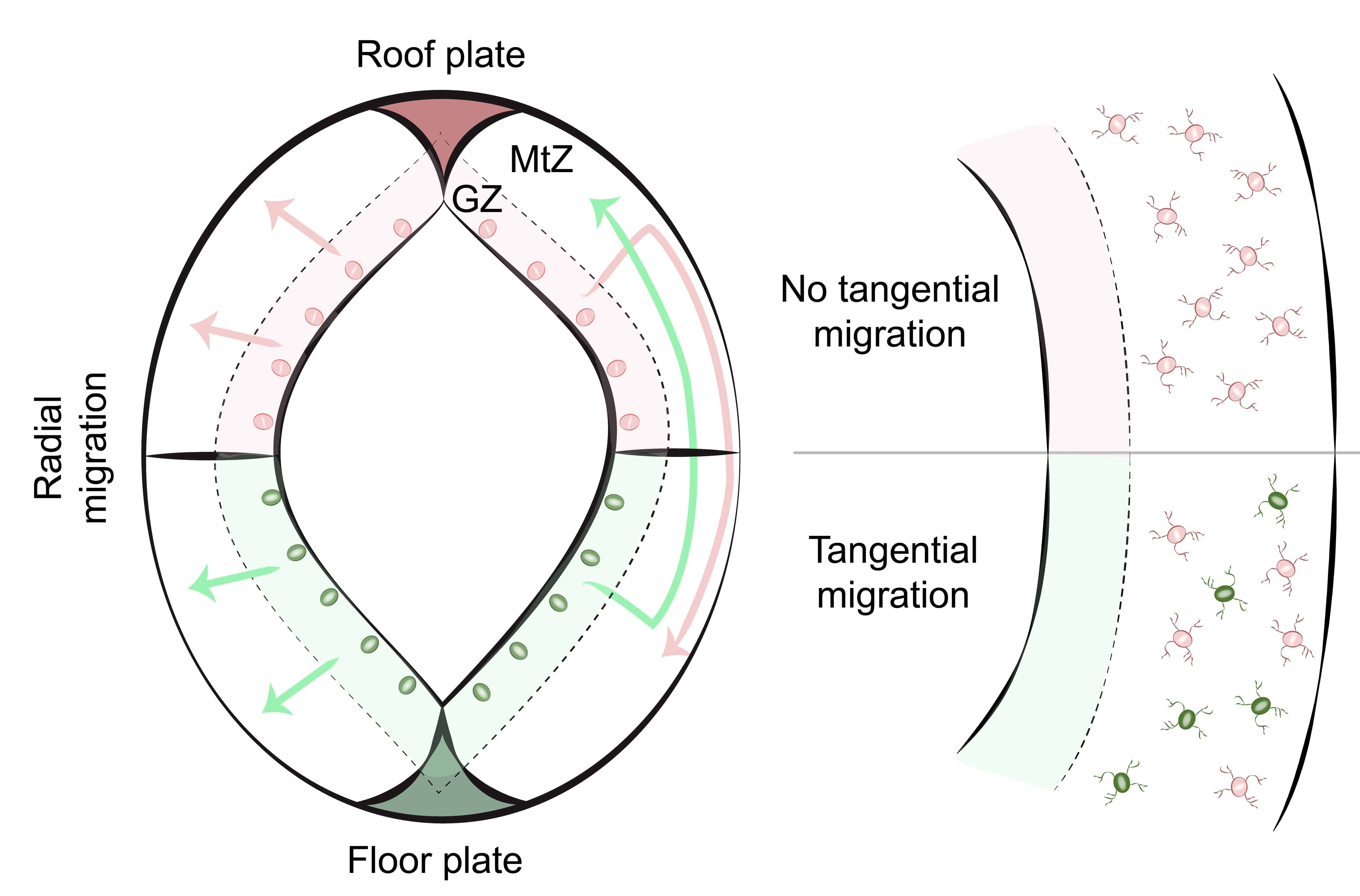
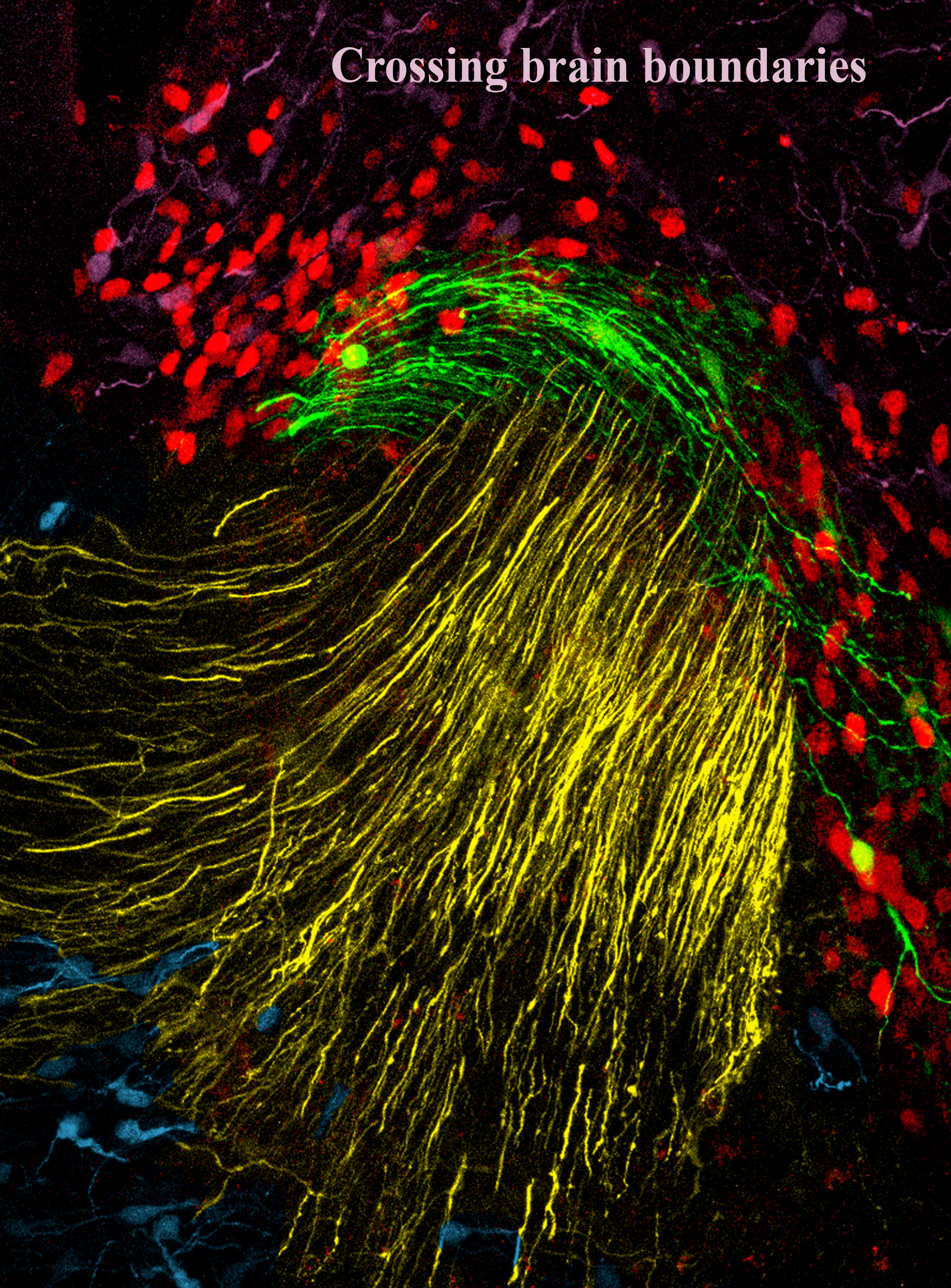
The tangential movement of neurons during development is a powerful source of neuronal diversityNeurons that reach their final location in the brain from a distant origin, by tangential migration, acquire a novel cellular type. We have found tangential migrations all over the brain, everywhere we have tested. Cajal-Retzius cells, neurons of the olfactory cortex, even amygdalar neurons, all travel through the embryonic brain.
This cellular movement is a rule of brain development, and no longer an exception.
Neural progenitor types
Many different types of neural stem cells generate the neurons of the neocortex
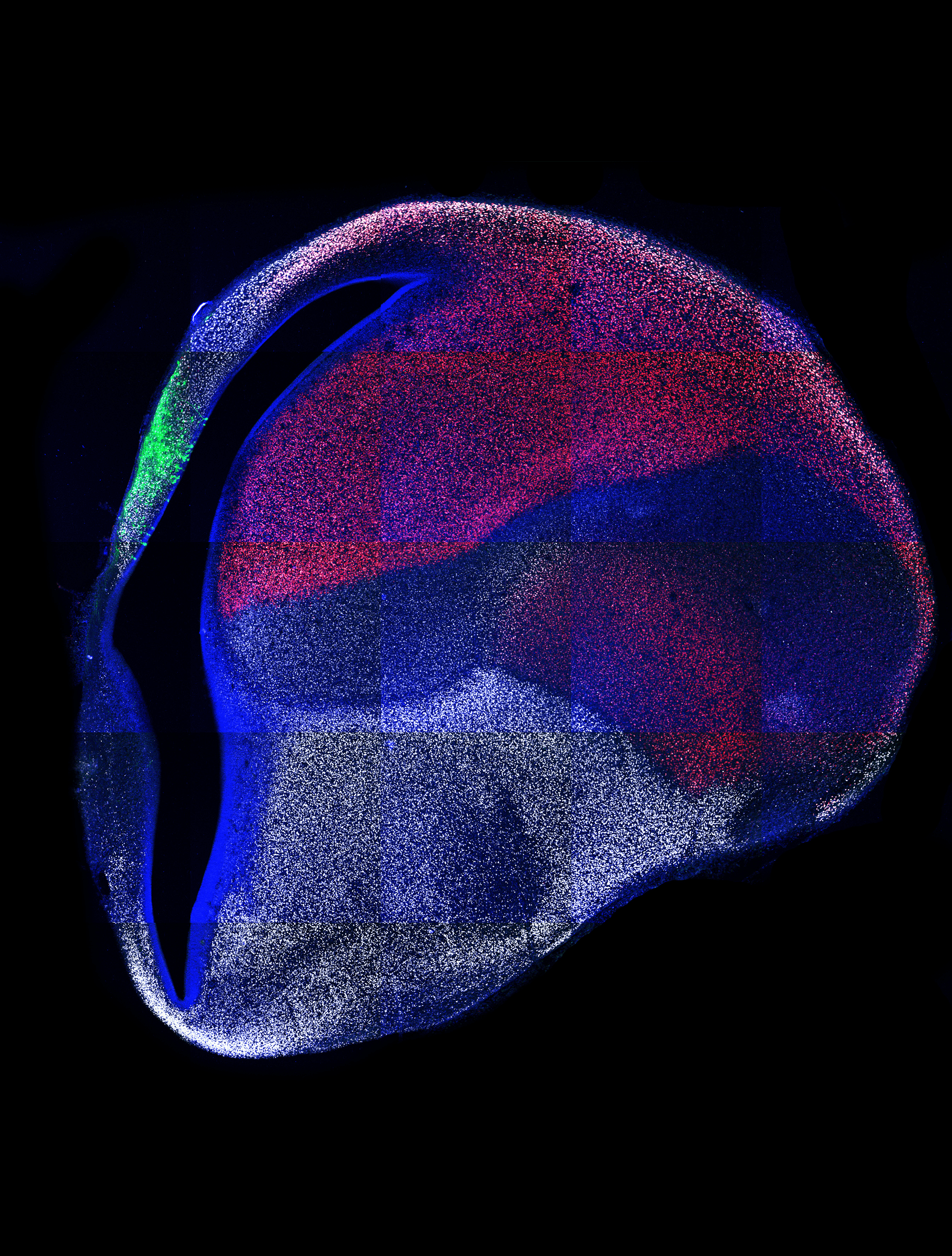
Regardless of the mammalian species under research, the progenitor populations giving rise to the neocortex are diverse and dynamic. From mouse to agouti and marmoset, we found that the germinative zone of the mammalian neocortex is widely heterogeneous and fearly similar across species.We also developed tools for combinatorial labelling of neural progenitors, useful for any vertebrate species.
Cortical scaffold cells
The cells providing instructions for cortical construction are missing in avian brains
Cajal-Retzius cells and subplate neurons are required to reach tangentially the developing neocortex. Once there, they provide essential cues for cortical formation and disappear when the job is complete. We tested the existence of this migraotry cells in the chick, that does not possess a neocortex. We found that the essential neurons for cortical development do not participate in the development of the avian brain, which suggest that the novel migration of these cells was a trigger for the origin of the neocortex.